Introduction:
If are you a seasoned mechanic, or just starting out, knowing how to use a torque wrench is a crucial part of automotive maintenance. A torque wrench is an essential tool to apply precise force when tightening any type of fastener. Whether you are torquing your wheels, a suspension arm, or head bolts, too little torque can lead to loosening of the fastener, or too much torque can cause damage to the component, or even shearing of the bolt. BMW engineers have stress tested all these components and have a call out for all the specific nuts and bolts on the car that should be followed. These torque values are very specific to the application and the class of bolt being used (ie 8.8, 10.9). If you want to learn about classes of bolts, please read our blog HERE.
What is a Torque Wrench?
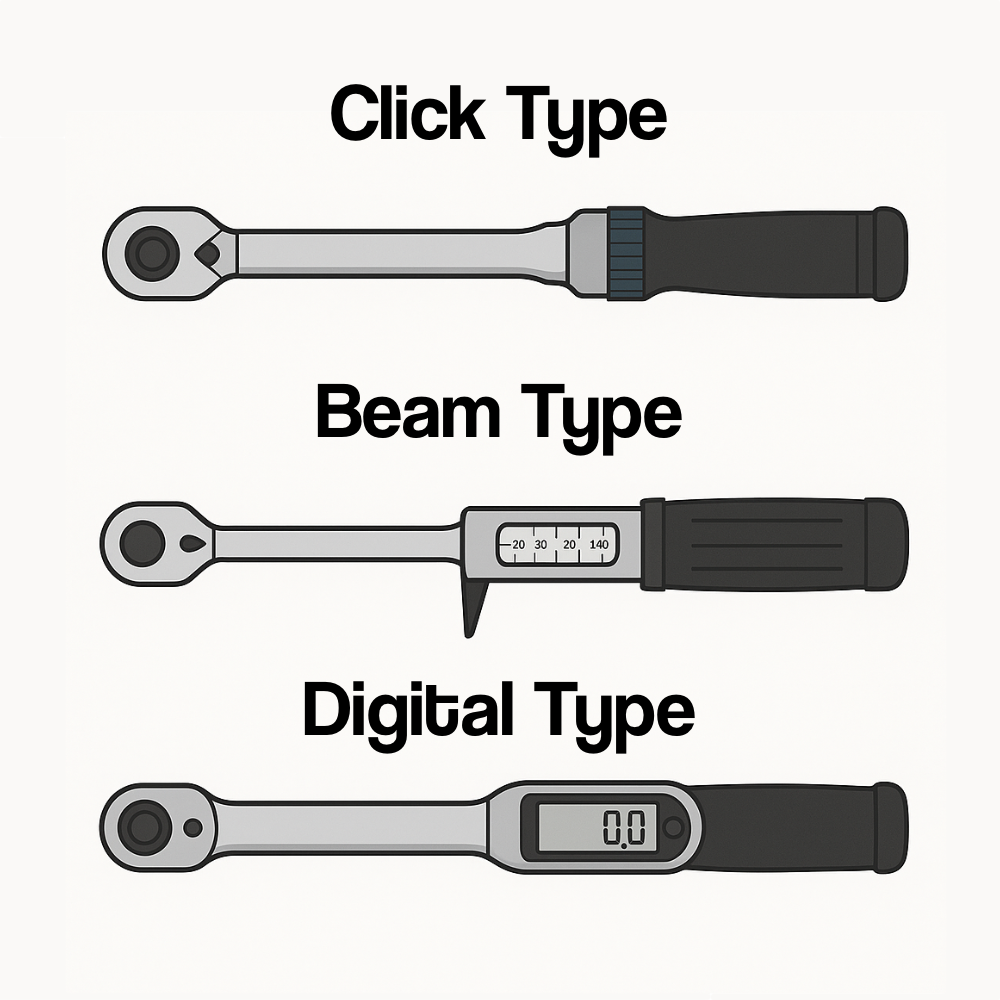
A torque wrench is a precise tool use to apply a specific torque value to a fastener. It ensures bolts and nuts are tightened to manufacturer specifications. There are 3 main types of torque wrenches:
- Click Type: The most popular style by mechanics. These work by twisting the grip on the bottom to adjust the torque value up and down. The emit a click noise when the proper torque value is reached.
- Beam Type: An older style torque wrench, but arguably the most reliable of the 3. The wrench allows you to adjust the torque value very fast. With this type, the torque is achieved by a scale and pointer, but some models will also click when the torque value is met.
- Digital Type: The newest of the 3, and the most expensive. The torque value is set on a digital screen, and when the torque is met, an audible beep will be heard. More expensive versions of these can also torque in degrees, which is common when tightening internal engine components.
Step by Step: How to Properly Use a Torque Wrench:
- Select the correct torque value given by the manufacturer from a manual or service guide.
- Set the wrenches value. If click type, screw the handle up and down, if beam type, adjust the knob to the correct value, if digital type, use the screen on the wrench and set the value there.
- Attach the correct socket/crows foot to match the fastener being tightened.
- Tighten slowly and steadily, do not go to fast or yank to tighten. Keep tightening until the audible click, or beep is heard.
Where to Hold the Torque Wrench:
Every torque wrench explained above has a handle. This is either the knurled section of the wrench or a rubber handle found on most digital wrenches. It is very important to tighten the fastener while holding the handle, and not any other part of the wrench. If you hold the wrench in the middle, you will receive an incorrect torque on the fastener. This is because it changes the arm, which ultimately changes the amount of force being applied.
Why Holding it Incorrectly Affects Torque:
As stated above, holding the wrench in a location other than the handle can affect the actual torque value. On a beam type torque wrench, holding off center bends the beam differently and an incorrect torque value is applied. On a click type torque wrench, the same principle is applied. Gripping near the head of the wrench may reduce the torque you “think” you’re applying. Gripping too far back can increase the torque value by over 10%, resulting in over torquing the fastener.
Tightening with a Crows Foot:
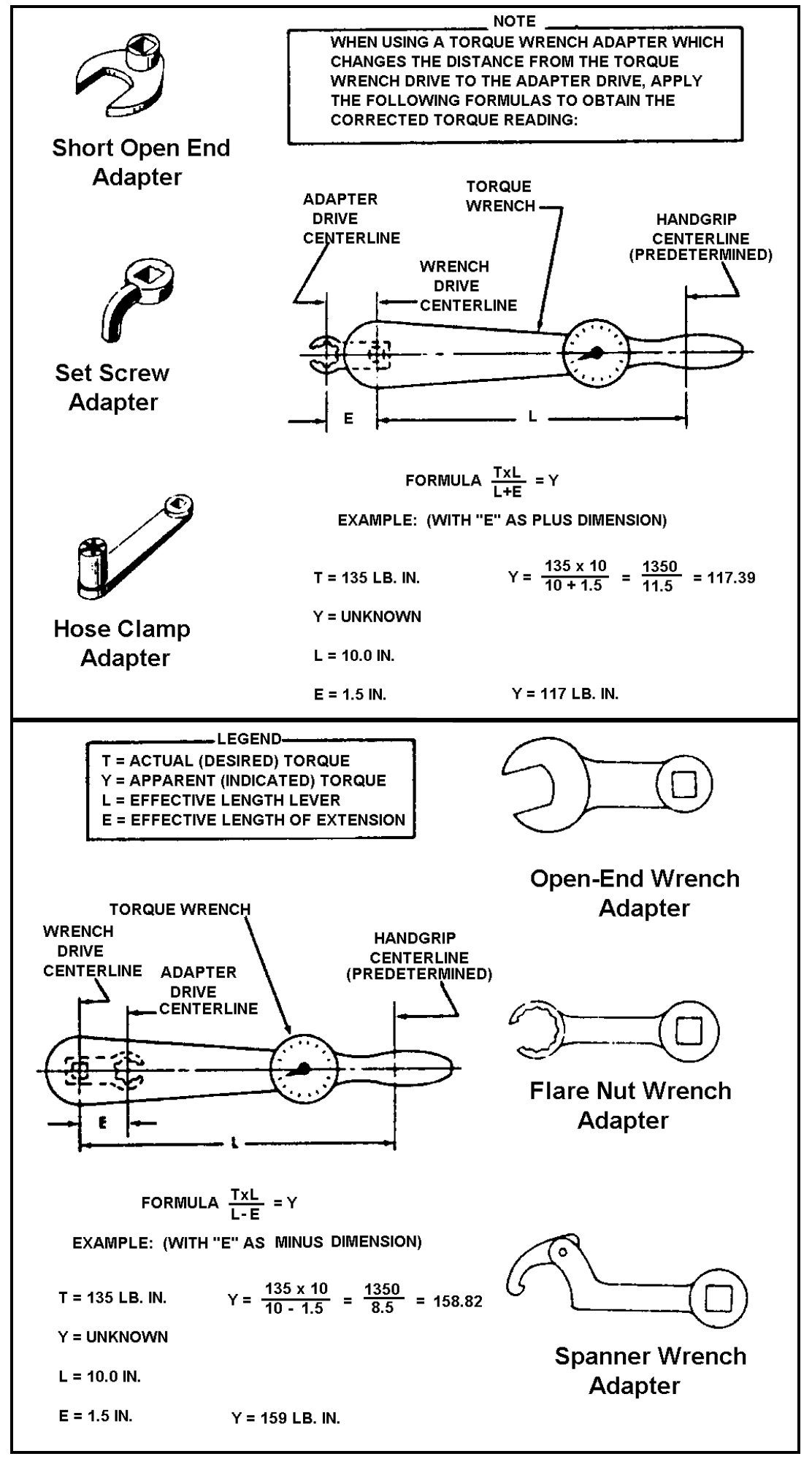
A crows foot is a very special tool, but if used improperly on a torque wrench, it can cause you to over or under torque a fastener. When using a crows foot, always keep it at 90 degrees to the head. In some instances, this is not possible, and the crows foot will have to be placed at 0 or 180 degrees on the head. In this scenario, some math will need to be done. With a crows foot extended out, you are essentially making the torque wrench longer, which will apply more torque. This is also overlooked, or not known by mechanics. The following picture with formulas can be used to determine what to set the torque wrench to in these scenarios.
Common Mistakes to Avoid:
- Do not use an extension or breaker bar on the handle of the torque wrench. This can damage the internals and most certainly give you an incorrect torque reading.
- Do not overtighten the fastener past the click. Once the wrench clicks or beeps stop. Over torquing the fastener can stretch the bolt. If a fastener is over torqued, loosen with a wrench or breaker bar, and retighten to the correct value.
- Do not loosen bolts with your torque wrench, unless the manufacturer of the wrench says this is acceptable. It is always best practice to loosen a bolt with a breaker bar, wrench or ratchet, and then apply torque with the torque wrench.
- Although there is some discussion on this one, most mechanics would say to set the torque wrench back to zero when not being used. This keeps stress off the internal springs during storage.
Tips for Accurate Torque:
- Calibrate your wrench annually. Most new torque wrenches come with a calibration sticker from the factory. If the torque wrench is accidentally dropped on the floor, it is best to get it tested again to see if it came out of spec.
- Grip in the correct place to avoid over or under torquing.
- Do not jerk or pull the torque wrench. Make a smooth and even force when applying torque to a fastener.
- When possible, always apply torque to the nut side of a bolt/nut assembly.
Conclusion:
A torque wrench is a crucial tool in any mechanics toolbox, but it is only good if used properly. Even if the wrench is calibrated correctly, but held in the wrong position, an incorrect torque value can be applied. Follow proper handling practices and you will extend the life of the tool. Wrench on!