BMW F87 M2 Colors and Production Numbers: The Most Popular, Rarest and Best Colors
The first-generation BMW M2 has quickly become one of the most desirable modern BMW M cars. Known internally as the F87, the original M2 combined compact dimensions, rear-wheel drive, a turbocharged inline-six and the availability of a six-speed manual transmission.
BMW introduced the F87 M2 for the 2016 model year with a modified N55 engine. An updated LCI version followed for 2018, before the substantially revised M2 Competition arrived for 2019 with the BMW M-developed S55 engine. The limited-production M2 CS represented the final and most specialized version of the F87.
Although the different F87 versions share the same basic body shell, their personalities, mechanical specifications and color choices are surprisingly different.
This guide explains:
- Every regular-production F87 M2 color
- Which colors were offered during each model year
- The most popular and rarest F87 colors
- Worldwide and United States production figures
- Manual versus DCT production
- The differences between the N55 M2 and S55 M2 Competition
- Which F87 version and color may be most collectible
A Note About F87 Production Numbers
BMW did not release one complete public production report breaking every F87 down by model year, country, color and transmission.
The figures in this guide come from a combination of BMW press information, production records decoded by BMW registry researchers and enthusiast VIN databases. Worldwide model totals are now fairly well documented, but some United States color-and-transmission combinations remain registry-derived rather than officially published by BMW.
For that reason, production figures should be treated as the best currently documented numbers, not as a factory-issued certificate for an individual car.
BMW F87 M2 Production Timeline
| Version | Primary U.S. model years | Engine | Output |
|---|---|---|---|
| Original M2 | 2016–2017 | N55B30T0 | 365 hp |
| M2 LCI | 2018 | N55B30T0 | 365 hp |
| M2 Competition | 2019–2021 | S55B30T0 | 405 hp |
| M2 CS | 2020–2021, depending on market | S55B30T0 | 444 hp |
Production dates and model years do not always align perfectly. BMW may begin manufacturing a new model year during the preceding calendar year, and preproduction cars can appear earlier than the official retail launch.
The M2 Competition, for example, was announced in April 2018 as a 2019 model for the United States. BMW confirmed that it replaced the N55 with the S55 engine and retained a choice of six-speed manual or seven-speed dual-clutch transmissions.
Original BMW F87 M2 Colors
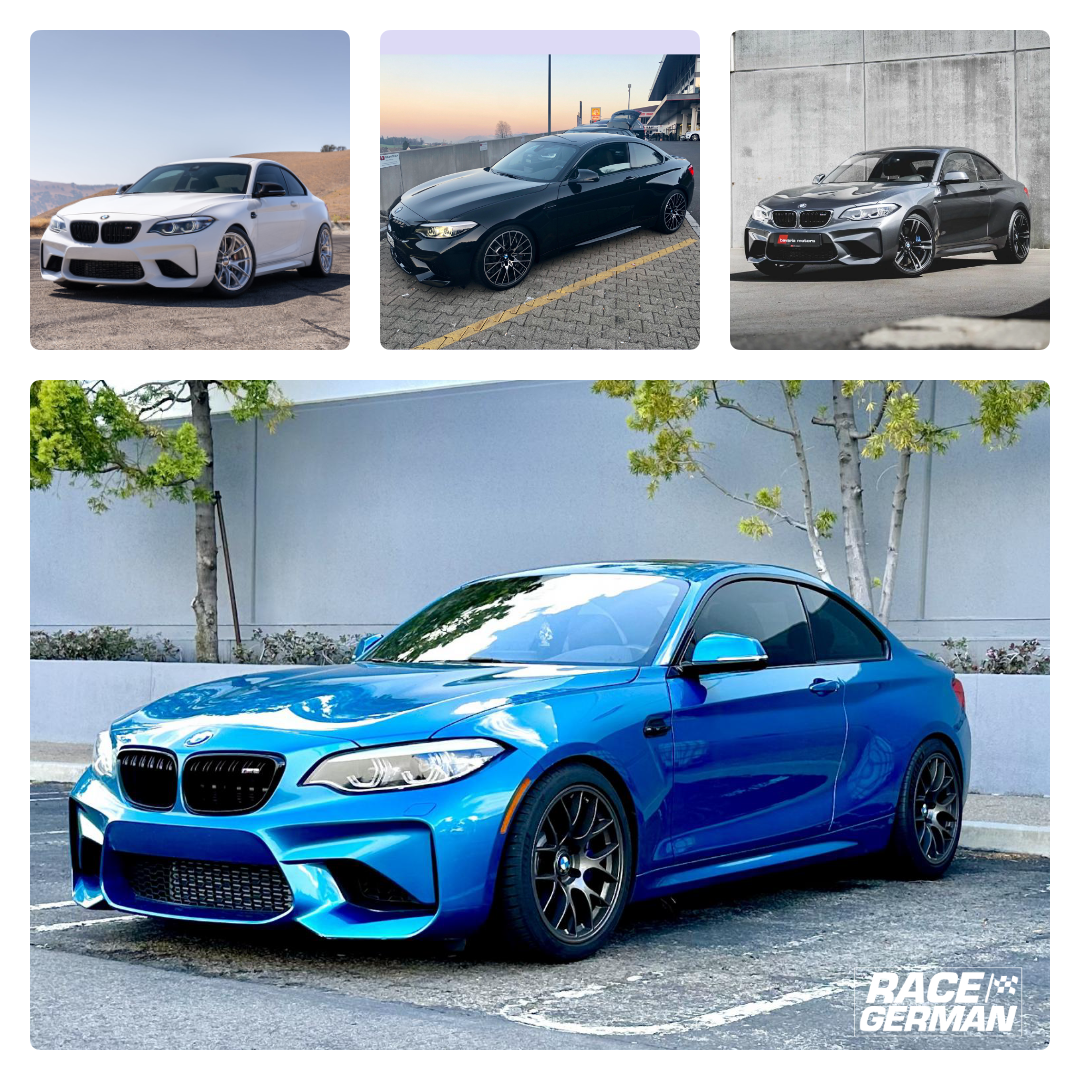
The original N55-powered M2 had one of the smallest color palettes of any modern M car. Buyers received only four regular-production exterior choices.
| Color | BMW paint code | Type |
|---|---|---|
| Alpine White III | 300 | Non-metallic |
| Black Sapphire Metallic | 475 | Metallic |
| Mineral Grey Metallic | B39 | Metallic |
| Long Beach Blue Metallic | C16 | Metallic |
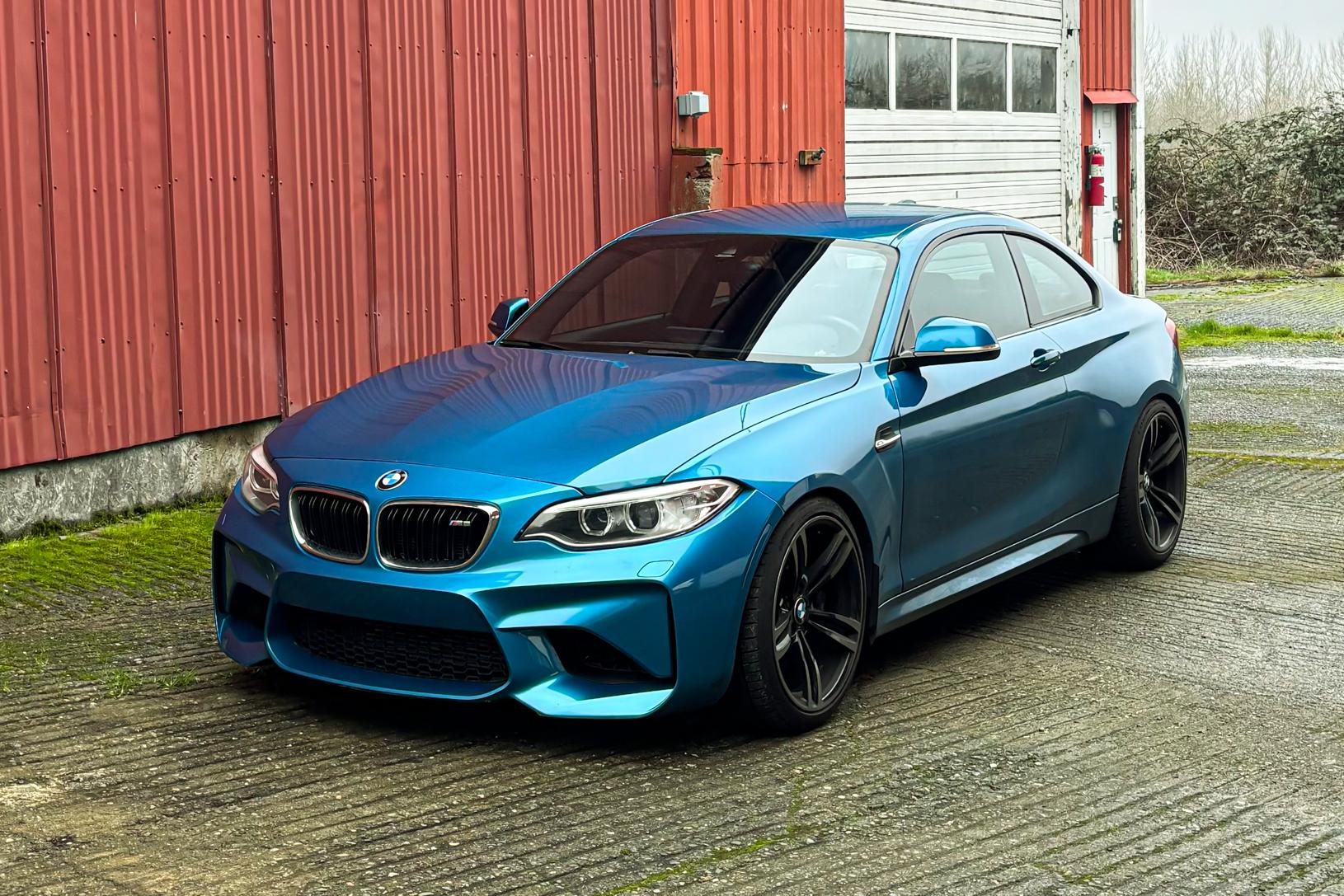
Long Beach Blue Metallic
Long Beach Blue was the signature launch color of the original M2 and remains the color most closely associated with the early F87.
It is much more complex than a conventional blue. Under overcast skies, it can appear like a darker turquoise or teal. In direct sunlight, the blue becomes brighter and the green tones become much more noticeable.
Long Beach Blue was also used on other BMW M products, but its association with the F87 M2 remains especially strong. It highlighted the M2’s widened fenders and helped distinguish the car from a standard 2 Series.
Why buyers chose it
- Signature F87 launch color
- Makes the widened bodywork easier to see
- Changes dramatically in different lighting
- Immediately recognizable as an M2
Drawbacks
- Not a subtle color
- Can appear greener than expected
- Matching repainted panels can be difficult
Alpine White III
Alpine White is a solid, non-metallic white that has appeared on generations of BMW performance cars.
On the F87, it creates a strong contrast with the black window trim, kidney grilles and lower bumper openings. White also makes it easier to add carbon-fiber or black exterior components without making the car look overly busy.
Why buyers chose it
- Traditional BMW M appearance
- Easy to pair with different wheel colors
- Accentuates black and carbon-fiber trim
- Generally easier to maintain than black
Drawbacks
- Less distinctive than Long Beach Blue
- Road grime is highly visible
- White cars were relatively common in many markets
Mineral Grey Metallic
Mineral Grey gave the original M2 a more understated appearance. Depending on the light, it can range from a medium metallic grey to a much darker charcoal.
The color disguises some of the M2’s more aggressive styling, but it also provides excellent contrast against the factory silver wheels and blue brake calipers.
Why buyers chose it
- Subtle and mature appearance
- Hides light dirt better than black or white
- Works with silver, black, bronze or gold wheels
- Shows the body lines without being overly bright
Drawbacks
- Can blend in with standard BMW models
- Less recognizable as an M2 launch color
- Replaced when the M2 Competition arrived
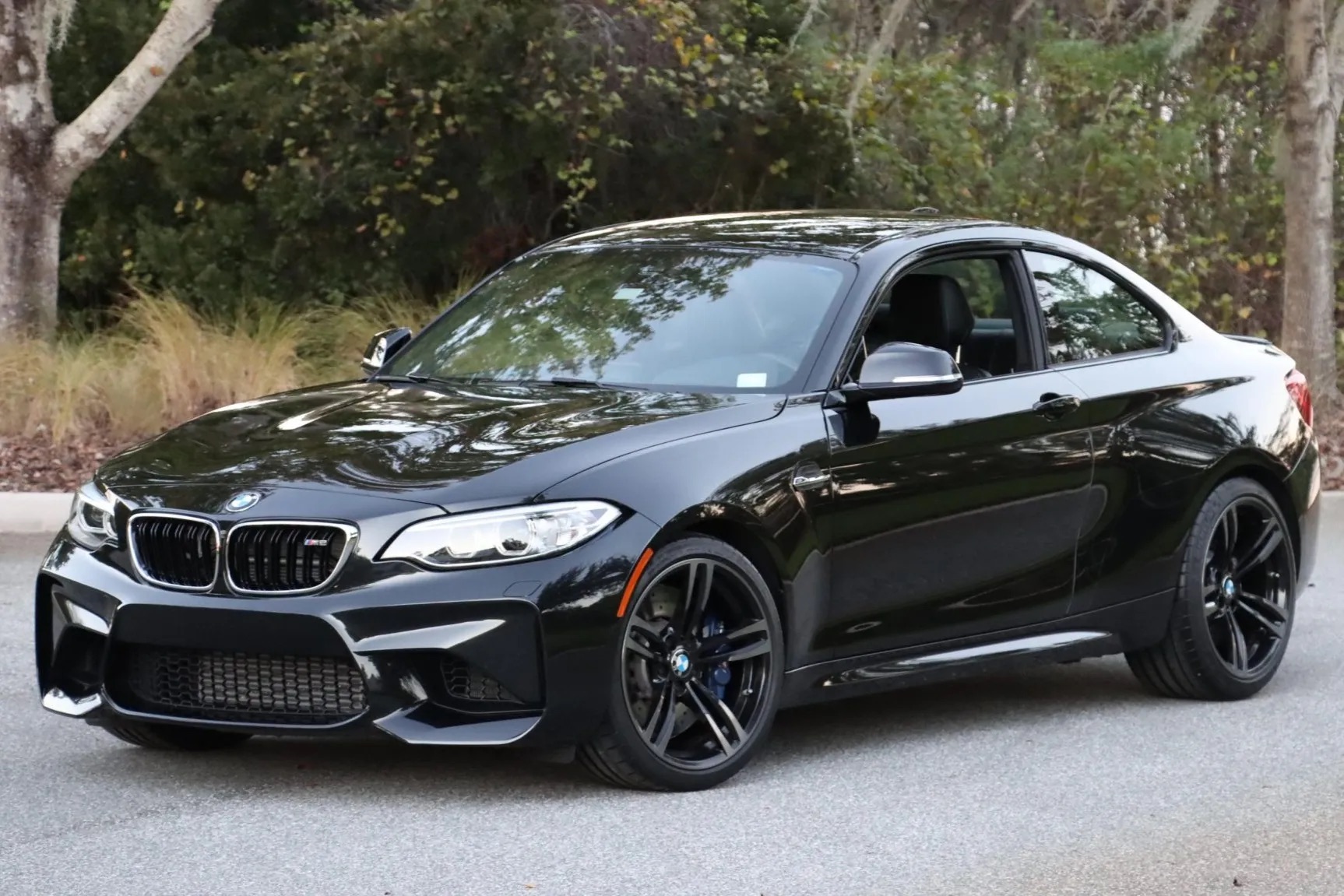
Black Sapphire Metallic
Black Sapphire gives the F87 a particularly aggressive appearance. It visually reduces the size of the kidney grilles, vents and trim pieces by blending them into the body.
It is also the most difficult regular F87 color to keep clean. Dust, water spots, swirl marks and paint imperfections are especially noticeable on a black car.
Why buyers chose it
- Aggressive, understated appearance
- Hides black plastic trim
- Works well with almost any wheel finish
- Gives the M2 a compact and purposeful look
Drawbacks
- Shows swirl marks and dust
- Hides some of the F87’s widened body lines
- Requires careful paint maintenance
BMW M2 Competition Colors
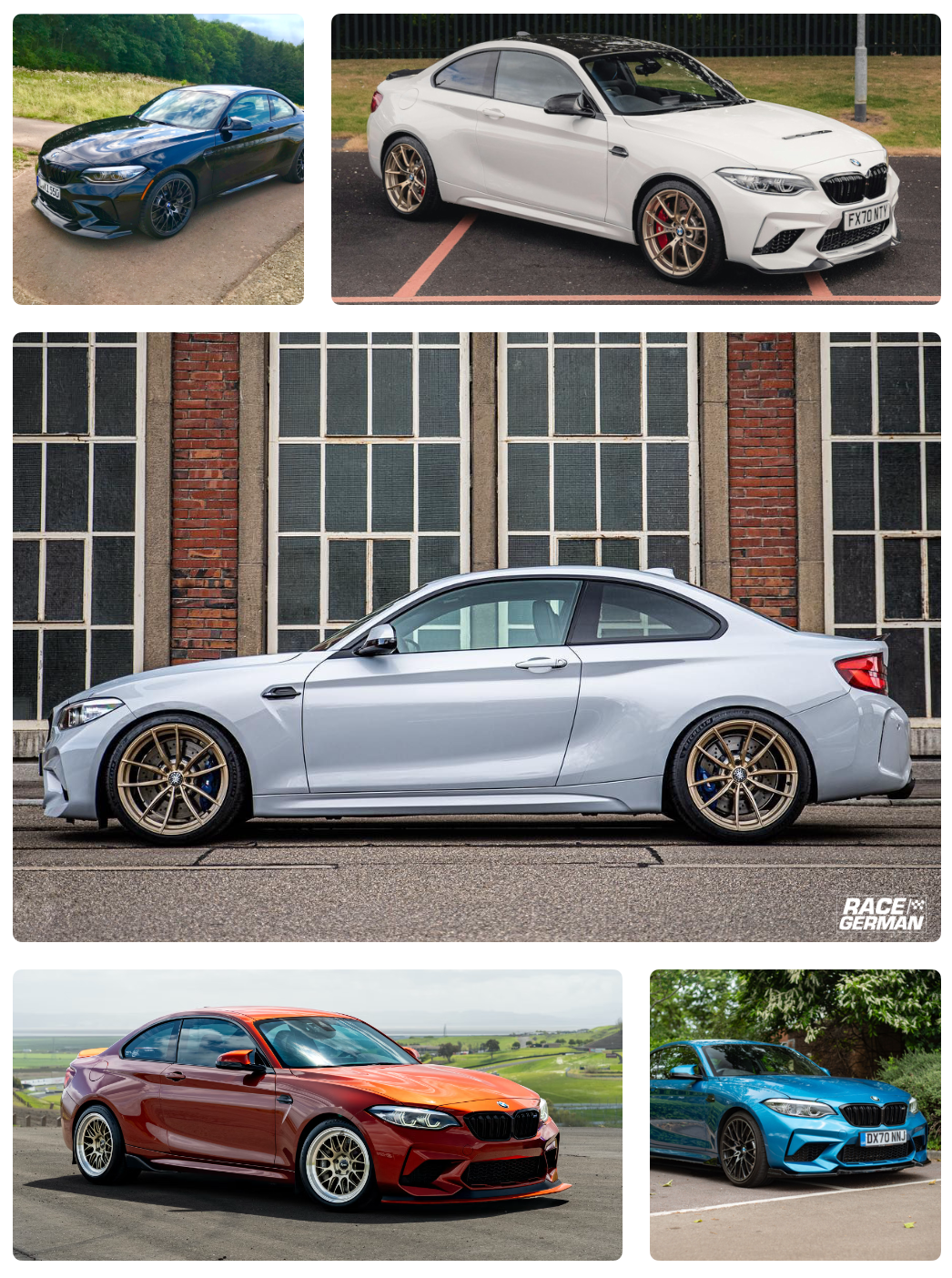
The M2 Competition continued with Alpine White, Black Sapphire and Long Beach Blue. However, Mineral Grey was discontinued and replaced by Hockenheim Silver. Sunset Orange was added as a fifth choice.
BMW specifically described Hockenheim Silver and Sunset Orange as the two new optional colors for the M2 Competition, with Hockenheim Silver replacing Mineral Grey.
| Color | BMW paint code | M2 Competition availability |
|---|---|---|
| Alpine White III | 300 | 2019–2021 |
| Black Sapphire Metallic | 475 | 2019–2021 |
| Long Beach Blue Metallic | C16 | 2019–2021 |
| Hockenheim Silver Metallic | C33 | 2019–2021 |
| Sunset Orange Metallic | C1X | 2019–2021 |
Hockenheim Silver Metallic
Hockenheim Silver became the signature color of the M2 Competition.
Despite its name, it does not look like a conventional bright silver. It often appears light grey, but it can display blue, beige or warm metallic undertones depending on the surrounding light.
The color was initially promoted as exclusive to the M2 Competition and is one of the easiest ways to identify a Competition model from a distance.
Why buyers chose it
- Signature M2 Competition color
- Unique appearance in different lighting
- Contrasts well with black Competition trim
- Hides dust and minor imperfections reasonably well
Drawbacks
- Can look flat in photographs
- Sometimes appears beige under warm artificial lighting
- Became one of the more commonly ordered Competition colors
Sunset Orange Metallic
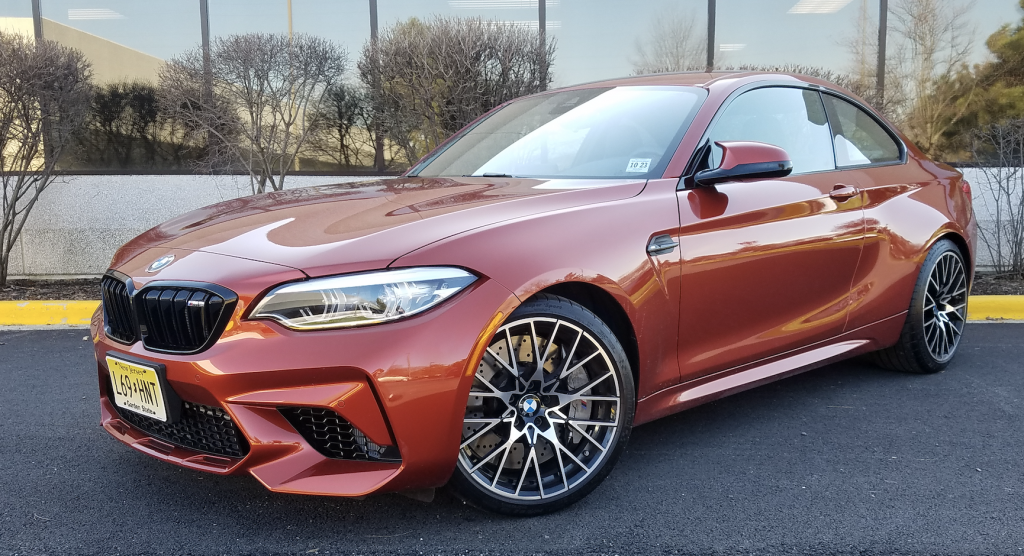
Sunset Orange was the boldest standard color offered on the M2 Competition.
It appears bright orange in direct sunlight but can take on a deeper copper or red-orange appearance in lower light. It is particularly effective at highlighting the M2’s rear quarter panels and flared fenders.
Why buyers chose it
- One of the boldest F87 colors
- Less frequently seen than Hockenheim Silver or Long Beach Blue
- Strong contrast with black wheels and trim
- Excellent choice for a visually distinctive car
Drawbacks
- More polarizing than white, black or grey
- May appeal to a smaller group of used-car buyers
- Paint matching can be challenging
Which Colors Were Available Each Year?
United States color availability
| Model year | Version | Colors |
|---|---|---|
| 2016 | Original M2 | Alpine White, Black Sapphire, Mineral Grey, Long Beach Blue |
| 2017 | Original M2 | Alpine White, Black Sapphire, Mineral Grey, Long Beach Blue |
| 2018 | M2 LCI | Alpine White, Black Sapphire, Mineral Grey, Long Beach Blue |
| 2019 | M2 Competition | Alpine White, Black Sapphire, Long Beach Blue, Hockenheim Silver, Sunset Orange |
| 2020 | M2 Competition | Alpine White, Black Sapphire, Long Beach Blue, Hockenheim Silver, Sunset Orange |
| 2021 | M2 Competition | Alpine White, Black Sapphire, Long Beach Blue, Hockenheim Silver, Sunset Orange |
Individual-painted and special-edition cars occasionally fall outside this table, but these were the normal catalog colors for regular U.S.-market production.
What Is the Most Popular F87 M2 Color?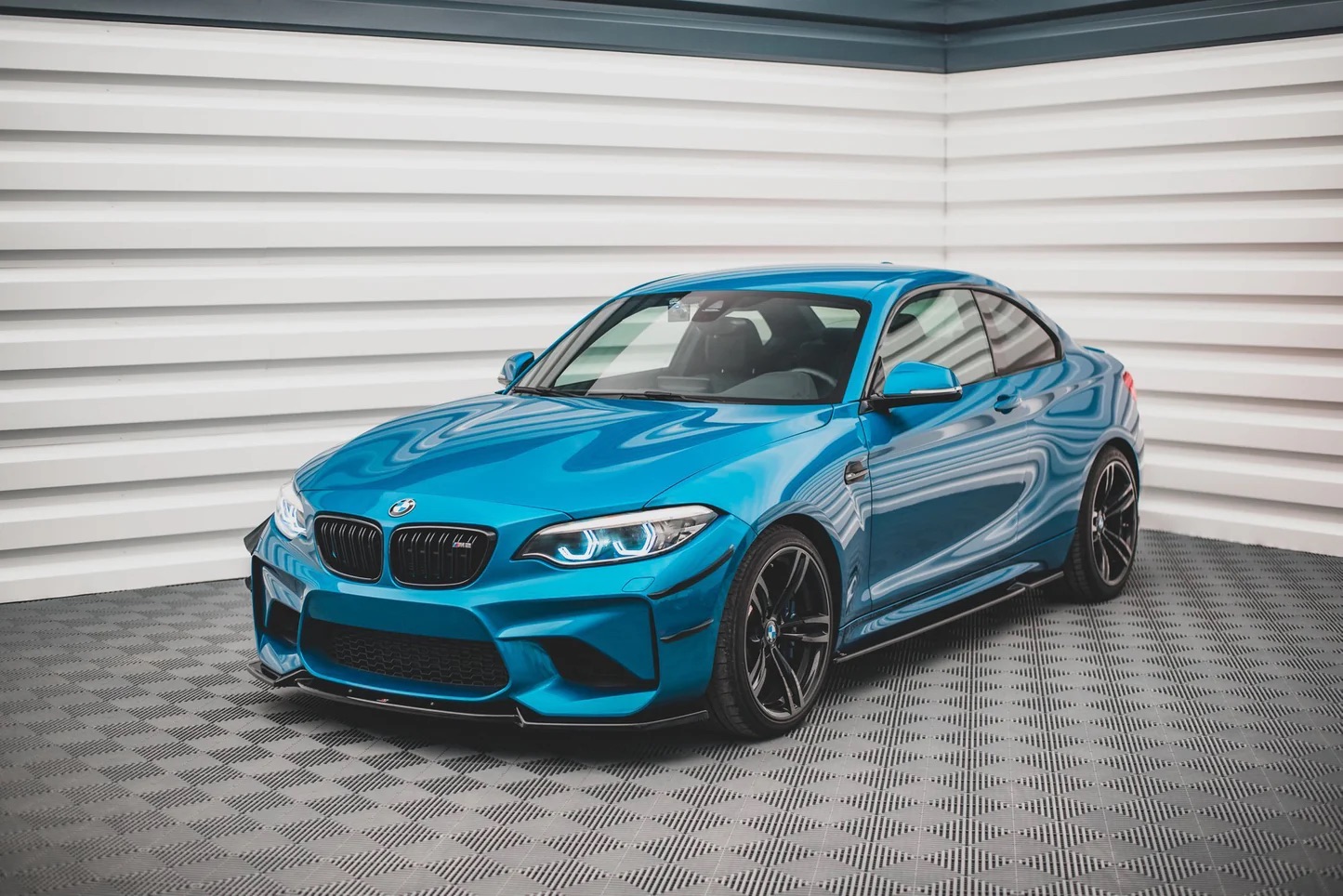
Most popular original M2 color: Long Beach Blue
Production registry data consistently identifies Long Beach Blue as the dominant color for the N55-powered M2.
That is not surprising. BMW used Long Beach Blue heavily in launch photography, advertisements and press vehicles. Many buyers wanted the new M2 to look immediately recognizable, and the launch color was the clearest way to accomplish that.
Alpine White was generally the next most common original-M2 color, followed by Mineral Grey. Black Sapphire tended to represent the smallest portion of the four-color original-M2 palette in worldwide registry data.
Approximate original-M2 popularity order
- Long Beach Blue
- Alpine White
- Mineral Grey
- Black Sapphire
The exact percentages vary by country. North American ordering patterns are not necessarily identical to those in Europe, the United Kingdom, Australia or Asia.
Most popular M2 Competition color: Hockenheim Silver
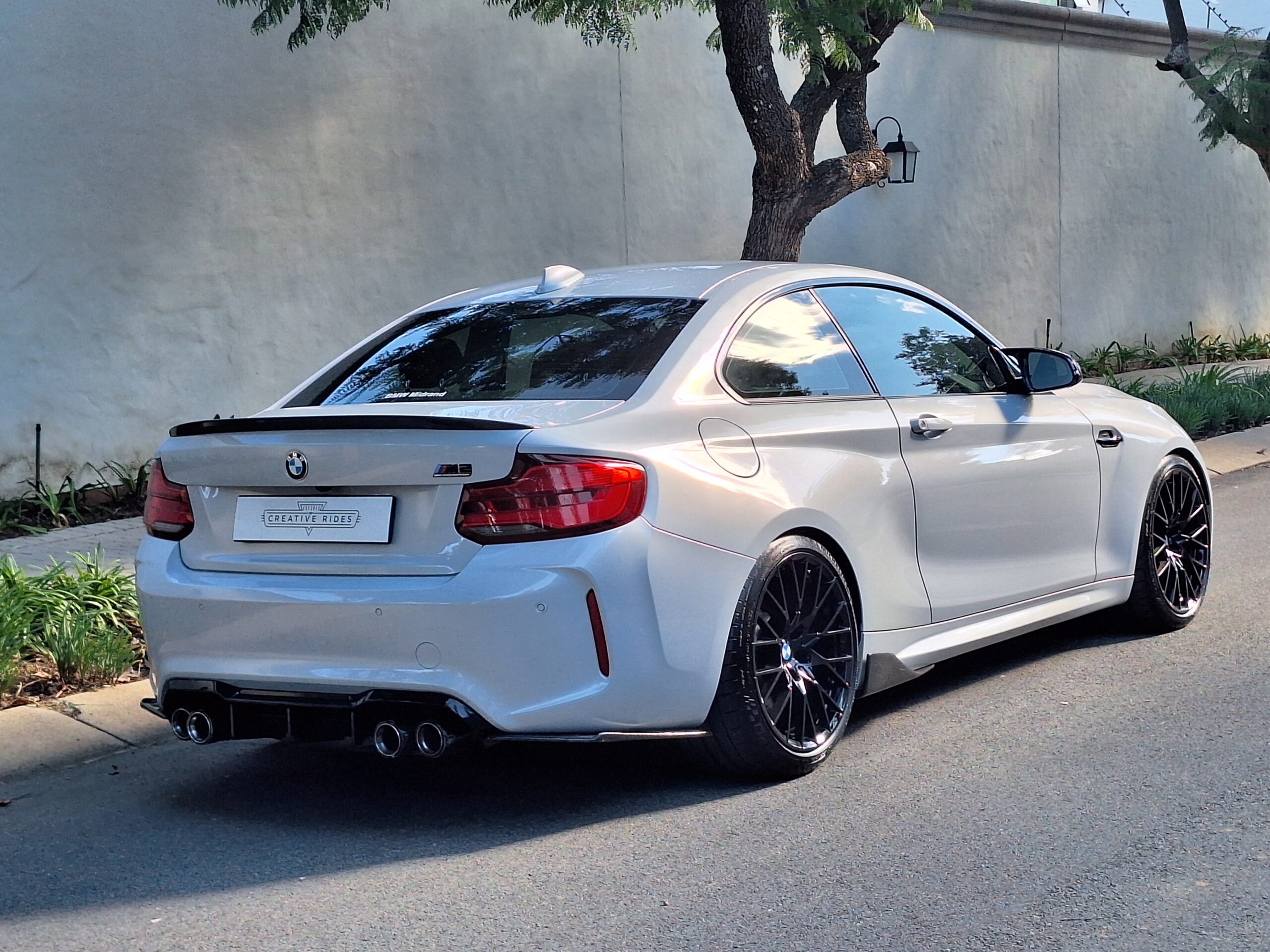
Hockenheim Silver appears to have been the most popular color for the M2 Competition worldwide.
Like Long Beach Blue on the original car, Hockenheim Silver received extensive use in BMW’s marketing materials and helped identify the revised Competition model. Long Beach Blue remained popular, while Black Sapphire and Alpine White continued to attract buyers looking for a more traditional appearance.
Sunset Orange appears less frequently than the neutral colors in most production datasets.
Approximate M2 Competition popularity order
- Hockenheim Silver
- Long Beach Blue
- Black Sapphire or Alpine White, depending on market
- Sunset Orange
- Individual colors
An Individual-painted M2 Competition is much rarer than any regular catalog color. Registry research has identified only a handful of factory Individual cars, including a U.S.-specification San Marino Blue example.
What Is the Rarest Regular F87 M2 Color?
The answer depends on which version of the F87 is being discussed.
Rarest original M2 color
Black Sapphire appears to be the least common regular color for the worldwide N55 M2 population.
That does not mean every Black Sapphire configuration is automatically rarer than every other combination. A specific color paired with a manual transmission, particular market specification, sunroof configuration or model year can result in a much smaller subset.
Rarest M2 Competition color
Sunset Orange appears to be one of the least common regular catalog colors worldwide, although the exact order can vary by country and transmission.
Any verified factory Individual M2 Competition is considerably rarer than Sunset Orange. These cars were exceptions rather than normally advertised ordering choices.
Rarest color by model association
- Original M2 only: Mineral Grey was discontinued when the Competition arrived.
- M2 Competition only: Hockenheim Silver and Sunset Orange were not regular colors on the N55 M2.
- M2 CS only: Misano Blue was the signature CS color and was not a regular M2 Competition catalog color.
This makes Mineral Grey particularly interesting. It may not be the lowest-volume N55 color, but it is permanently associated with the original M2 because it did not continue onto the Competition.
Worldwide F87 M2 Production Numbers
Recent registry research places worldwide F87 production at approximately 62,000 cars when the original M2, M2 Competition and M2 CS are combined.
Best documented worldwide totals
| F87 version | Worldwide production |
|---|---|
| Original N55 M2, including pre-LCI and LCI | Approximately 29,700 |
| M2 Competition | 30,005 |
| M2 CS | 2,381 |
| Combined road-car production | Approximately 62,100 |
The finalized registry count for the M2 Competition is 30,005 cars produced through June 2021.
The final M2 CS registry count is 2,381 cars. Of those, 940 had a manual transmission and 1,441 had the DCT.
These figures exclude dedicated race cars when the race-car production series is counted separately.
Why some older totals are different
Earlier articles frequently stated that BMW would build approximately 2,200 M2 CS models. That was BMW’s initial announced target, not the final decoded production count. The completed VIN data now indicates that 2,381 road-going M2 CS examples were produced.
The same issue affects early estimates for the original M2. Initial reports suggested a much lower production run, but strong demand led to considerably more cars being manufactured.
F87 M2 Production in the United States
United States totals are more difficult to present because some available datasets combine the U.S. and Canada as North America, while others separate cars by destination-market type code rather than final retail registration.
Approximately 11,700 F87 M2 road cars were produced for the United States across the original M2, M2 Competition and M2 CS. Depending on which preproduction and destination-coded cars are included, published totals can differ slightly.
Approximate U.S. production by version
| F87 version | Approximate U.S. production |
|---|---|
| Original N55 M2 | Approximately 6,900–7,000 |
| M2 Competition | Approximately 4,400–5,300 |
| M2 CS | Approximately 560–570 |
| Total | Approximately 11,700–12,000 |
These should not be added blindly because some older Competition estimates were calculated by subtracting combined North American totals and may include Canadian cars.
One commonly cited forum estimate places the original North American N55 population at approximately 7,000 and the Competition population at approximately 4,500, before separating U.S. cars from Canadian cars.
For an individual car, the most reliable rarity calculation requires its complete specification:
- Destination market
- Model year
- Exterior color
- Transmission
- Interior specification
- Sunroof or slicktop
- Option package
- Production date
A statement such as “one of 300” may refer to North America rather than the United States, or it may include both preproduction and customer cars. Always verify what the number actually represents.
How Many F87 M2s Were Manual?
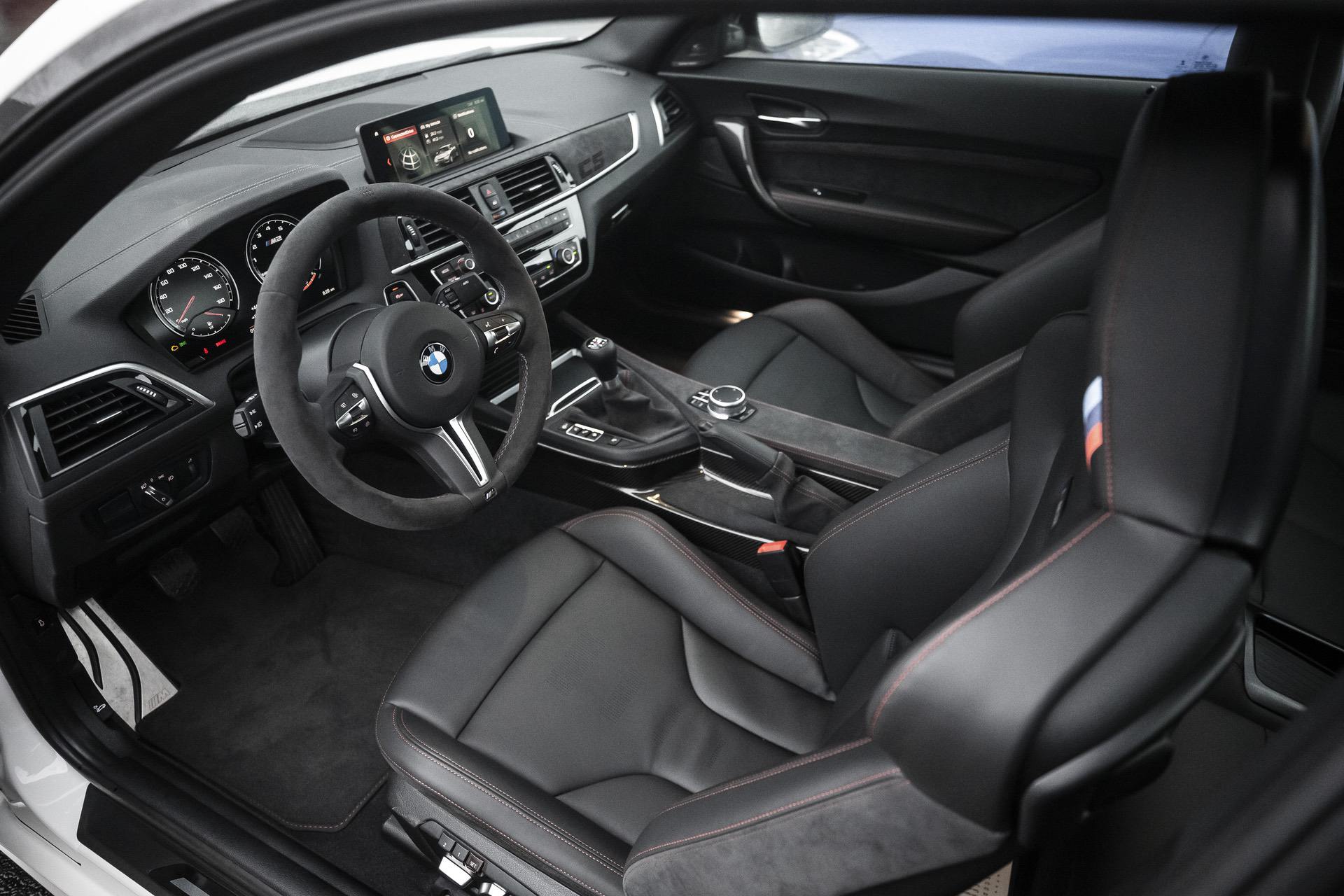
Every road-going version of the F87 was available with a six-speed manual transmission.
The alternative was BMW’s seven-speed M Dual-Clutch Transmission, commonly called the M-DCT or simply DCT.
Transmission choices
| Version | Manual | Automatic |
|---|---|---|
| Original M2 | 6-speed manual | 7-speed DCT |
| M2 Competition | 6-speed manual | 7-speed DCT |
| M2 CS | 6-speed manual | 7-speed DCT |
Worldwide manual-versus-DCT trends
DCT was the more popular transmission worldwide. The difference was particularly significant in markets where automatic performance cars have a higher take rate or where the manual M2 was difficult to order.
North America took a much larger percentage of manual cars than many international regions.
A precise final manual-versus-DCT count for every original M2 and M2 Competition market has not been released by BMW in one public table. Registry charts indicate the following general pattern:
| Version | Approximate worldwide trend |
|---|---|
| Original N55 M2 | DCT majority |
| M2 Competition | DCT majority |
| M2 CS | 940 manual / 1,441 DCT |
| U.S.-market F87 | Manual share substantially higher than worldwide average |
For the M2 CS, the finalized split means approximately 39.5 percent were manual and 60.5 percent were DCT.
Is a manual F87 automatically rare?
Not necessarily.
A manual F87 is less common worldwide, but manual take rates were strong in the United States. Some U.S. manual color combinations are still relatively common compared with DCT cars in countries where few manuals were ordered.
However, manual cars are likely to remain especially desirable among collectors because the F87 was the final M2 generation available with BMW’s seven-speed DCT. The later G87 uses an eight-speed torque-converter automatic instead.
Original N55 M2 vs. M2 Competition
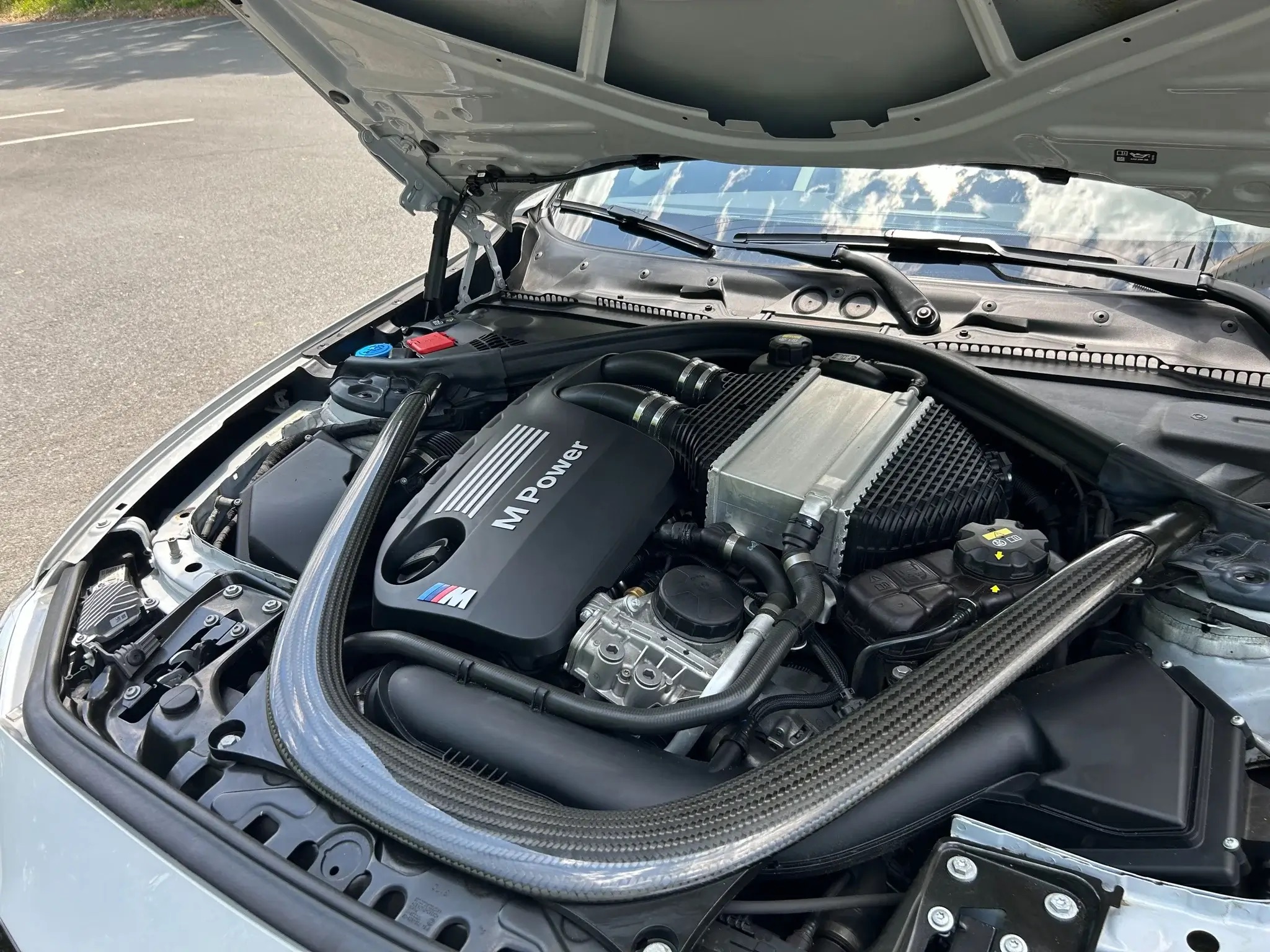
The difference between the original M2 and M2 Competition is much greater than a badge, bumper or software tune.
The original M2 uses a heavily revised version of BMW’s N55 engine. The Competition uses the S55 engine developed by BMW M for the F80 M3 and F82 M4.
Engine comparison
| Specification | Original M2 | M2 Competition |
|---|---|---|
| Engine | N55B30T0 | S55B30T0 |
| Configuration | 3.0-liter inline-six | 3.0-liter inline-six |
| Turbo system | Single twin-scroll turbocharger | Two mono-scroll turbochargers |
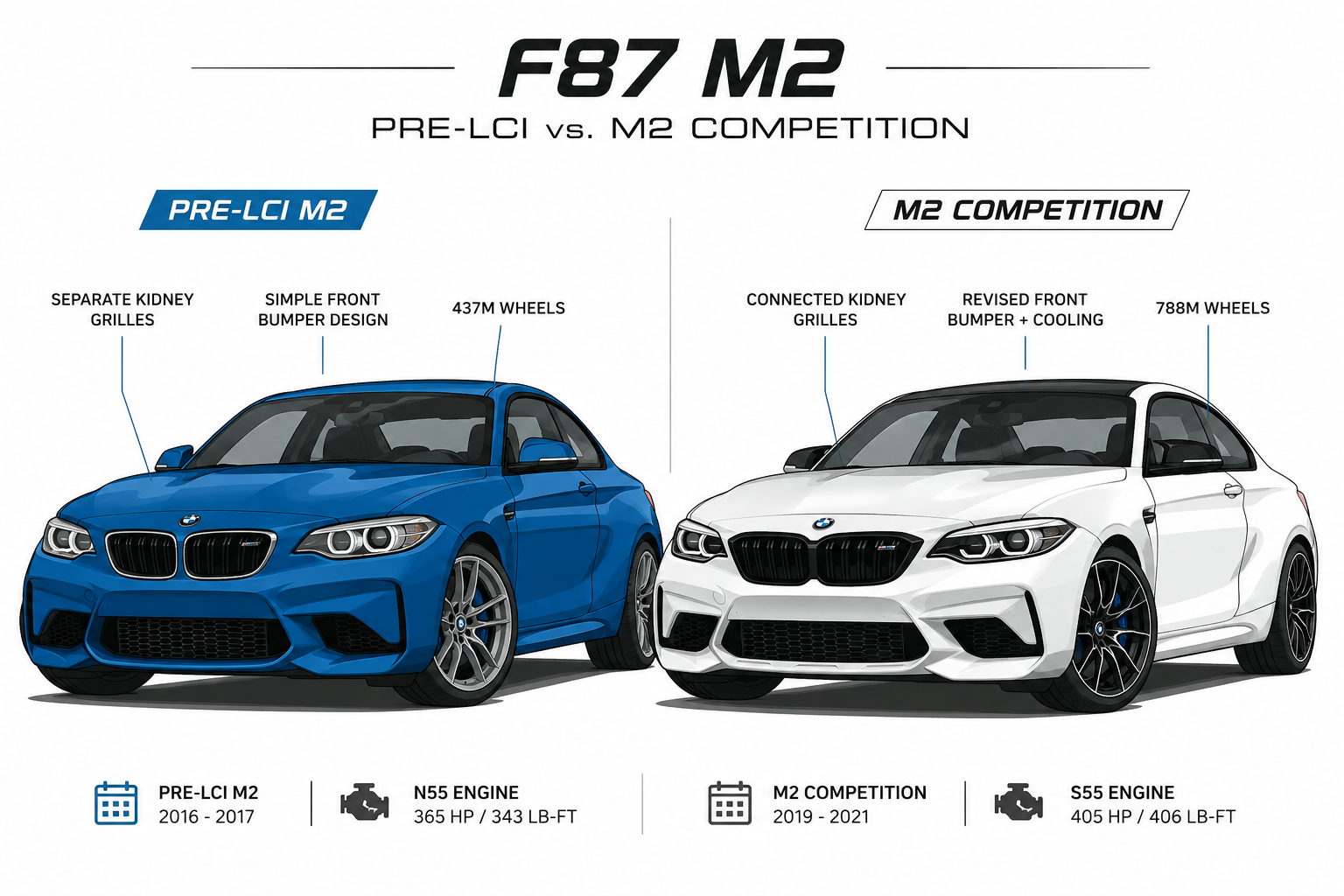
| U.S. output | 365 hp | 405 hp |
| U.S. torque | 343 lb-ft, 369 lb-ft overboost | 406 lb-ft |
| Redline | Approximately 7,000 rpm | Approximately 7,500 rpm |
| Manual transmission | 6-speed | 6-speed |
| Automatic | 7-speed DCT | 7-speed DCT |
BMW rated the U.S.-market M2 Competition at 405 horsepower and 406 pound-feet of torque.
The N55-powered original M2
The original M2’s N55 is not identical to the engine in a standard 335i or M235i. BMW upgraded it for sustained performance use and incorporated components and concepts from contemporary M engines.
The result is an engine known for immediate response, a broad torque curve and a distinctive exhaust note.
N55 M2 personality
The N55 car generally feels:
- More responsive at lower engine speeds
- More playful and less serious
- Better sounding in factory form
- Slightly lighter at the front
- More like an enhanced traditional BMW road car
The N55’s single twin-scroll turbocharger provides a relatively natural-feeling torque delivery. It does not have the same upper-rpm urgency or tuning potential as the S55, but many owners prefer its sound and everyday character.
The S55-powered M2 Competition
The S55 uses two turbochargers, a closed-deck crankcase design, a stronger cooling system and more substantial track-oriented hardware.
BMW added larger kidney grille openings and revised the front bumper to increase airflow. The Competition also received additional cooling equipment and a new exhaust system with black-chrome outlets.
S55 M2 Competition personality
The Competition generally feels:
- Faster throughout the rev range
- Stronger at higher engine speeds
- More stable and serious
- Better suited to repeated track use
- More responsive to major power upgrades
The tradeoff is sound. The S55 has a sharper, more mechanical exhaust note than the N55 and is frequently considered less musical in standard form.
Major Mechanical Differences
Cooling system
The M2 Competition has a substantially more extensive cooling package.
Its S55 installation includes additional cooling capacity designed to manage the higher output and repeated track use. The revised grille openings and bumper are functional changes, not simply cosmetic updates.
Chassis reinforcement
BMW added a carbon-fiber-reinforced-plastic strut brace and additional front-end bracing to the Competition. This improves structural rigidity and gives the front axle a more precise response.
The original M2 still handles extremely well, but the Competition feels more tied down and deliberate.
Differential and chassis electronics
Both versions use an electronically controlled Active M Differential, but the Competition received revised programming and integration with its updated M Dynamic Mode and engine controls.
Brakes
The original M2 came with four-piston front and two-piston rear fixed calipers.
The M2 Competition retained a capable standard brake package in some markets and offered a larger M Sport brake system. The upgraded setup uses larger rotors and substantial six-piston front calipers, but it also adds unsprung weight.
Buyers should not assume that every Competition has the larger brakes. The exact factory brake package should be verified by option code and visual inspection.
Wheels
The original M2 is best known for its 19-inch Style 437M wheels.
The Competition introduced the more complex Style 788M design. These wheels help visually identify the model but can be more difficult to clean and are not universally preferred.
Exhaust system
The N55 M2 uses a simpler exhaust layout and is generally considered the better-sounding factory car.
The Competition’s S55 exhaust uses electronically controlled valves and black-chrome outlets. It produces a harder and more aggressive tone, but the twin-turbo S55 does not deliver the same deep inline-six sound as the N55.
Weight
The Competition gained weight from its S55 engine, cooling equipment, chassis bracing and additional hardware.
The exact difference depends on transmission and equipment, but the original M2 generally feels slightly lighter and more eager to change direction. The Competition counters with more power, greater rigidity and improved heat management.
Exterior Differences Between the N55 M2 and M2 Competition
The two cars appear similar at first glance, but several details make them easy to distinguish.
Front bumper and kidney grilles
The Competition has larger, more connected-looking kidney grilles and revised lower bumper openings. These changes provide additional airflow to the S55 cooling system.
The original M2 has more separated kidney grilles and a simpler front-bumper design.
Mirrors
Both the original M2 and M2 Competition use standard 2 Series-style mirrors rather than the aerodynamic M mirrors fitted to the M2 CS.
Badging
The Competition carries “M2 Competition” badging, although badges are easily replaced and should never be used as the only method of identification.
Exhaust outlets
The Competition’s factory exhaust tips are finished in black chrome. The original M2 generally uses brighter polished outlets.
Paint colors
Mineral Grey indicates an original N55 M2 when the paint is factory original.
Hockenheim Silver and Sunset Orange indicate an M2 Competition, again assuming factory-original paint.
Long Beach Blue, Alpine White and Black Sapphire were available on both versions.
Interior Differences
Original M2
The original car uses black Dakota leather with blue contrast stitching. It has a relatively simple interior that closely resembles a well-equipped 2 Series, with M-specific gauges, trim and controls.
M2 Competition
The Competition receives several subtle updates:
- M2 Competition identification
- Revised instrument displays
- Illuminated M2 logos in the seat backrests
- Blue or orange interior stitching, depending on specification
- M1 and M2 steering-wheel shortcut buttons
- Revised drive-mode controls
The M1 and M2 buttons are among the most useful changes. They allow drivers to save preferred combinations of engine response, steering, stability-control and DCT settings.
Pre-LCI vs. LCI N55 M2
Not every N55-powered M2 is identical.
The 2018 M2 received BMW’s Life Cycle Impulse update, commonly called the LCI. The engine and basic performance remained the same, but the car received several visual and interior updates.
Major LCI changes
- Revised LED headlights
- Updated LED taillights
- Revised instrument cluster
- Updated dashboard design
- Newer iDrive equipment
- Minor trim and interior changes
The 2016 and 2017 cars are generally called pre-LCI models. The 2018 N55 car is the LCI.
For some buyers, the LCI is the ideal original M2 because it combines the N55 engine with the later lighting, dashboard and infotainment. Others prefer the simpler gauges and appearance of the earliest cars.
Which F87 M2 Is Best?
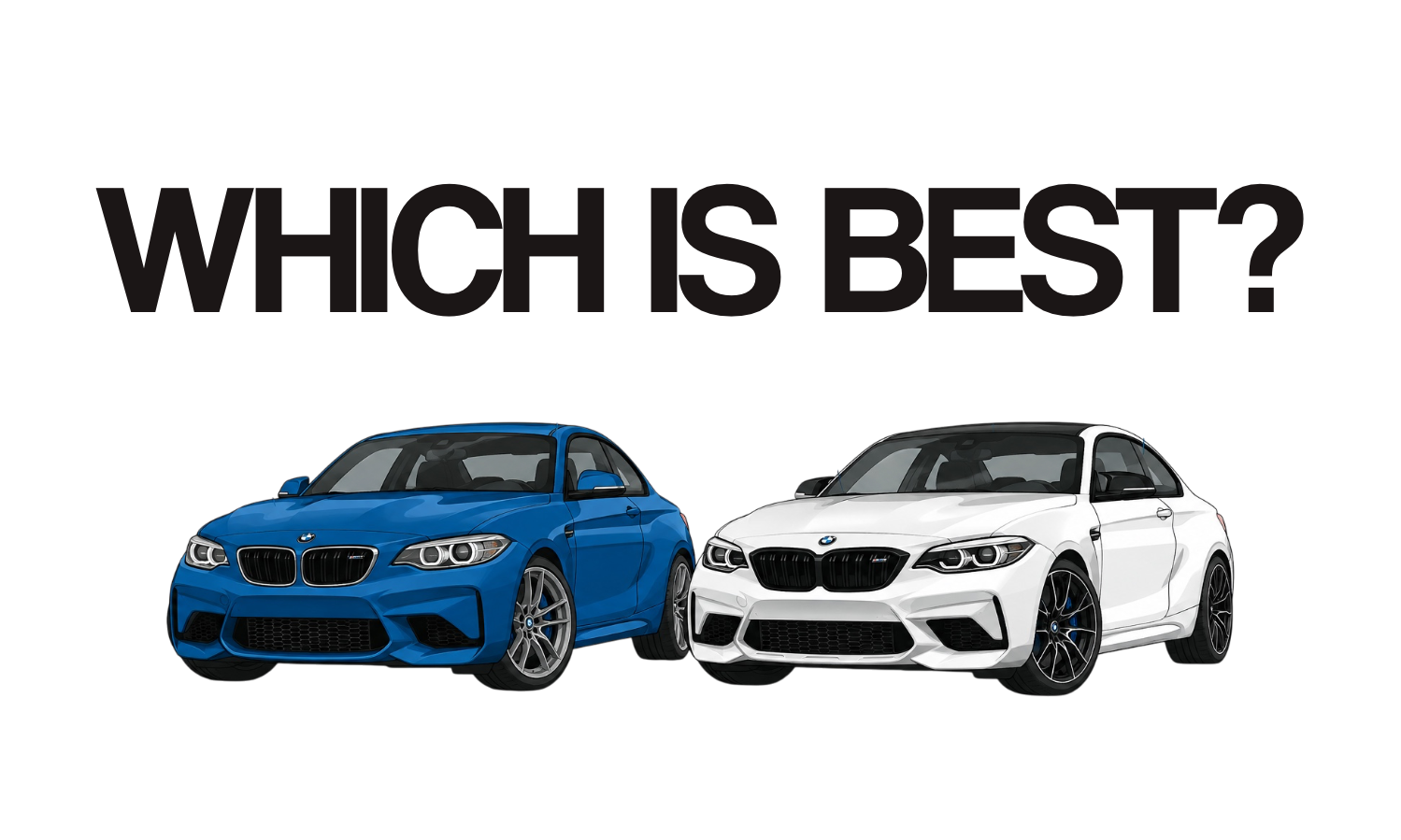
There is no universally correct answer.
Choose the original N55 M2 if you want:
- The more distinctive factory exhaust note
- Slightly lower weight
- Simpler mechanical character
- Lower purchase price
- The original version of the F87 formula
- Mineral Grey as a color choice
Choose the M2 Competition if you want:
- More factory power
- Greater tuning potential
- Stronger cooling for track use
- Increased front-end rigidity
- M1 and M2 steering-wheel controls
- Hockenheim Silver or Sunset Orange
- More substantial M-specific engineering
Choose the M2 CS if you want:
- The most collectible factory F87
- 444 horsepower
- Adaptive suspension
- Carbon-fiber body components
- Limited production
- The most focused factory setup
The M2 CS is also dramatically more expensive and costly to replace parts on. For owners who intend to modify, track and regularly drive the car, a standard Competition may provide better value.
Which F87 Color Will Hold Its Value Best?
Condition, mileage, service history and originality will have a greater effect on long-term value than color alone.
However, certain colors have stronger collector appeal.
Long Beach Blue
Long Beach Blue will likely remain one of the safest choices because it is the color most closely linked to the original M2’s launch.
It is recognizable, unmistakably BMW and historically significant to the model.
Hockenheim Silver
Hockenheim Silver has a similar relationship with the M2 Competition. It was introduced as the Competition’s signature color and is unique to that chapter of the F87 story.
Its high production volume may prevent it from being considered rare, but popularity and rarity are not the same thing. Collectors often want the color that best represents a particular model.
Mineral Grey
Mineral Grey may become increasingly interesting because it was limited to the N55 era and did not carry over to the M2 Competition.
It is more understated than Long Beach Blue but provides a clear distinction between an original M2 and a Competition.
Sunset Orange
Sunset Orange is a strong choice for buyers prioritizing rarity and visual impact.
It appears to have been ordered less frequently than Hockenheim Silver and Long Beach Blue. Finding a low-mileage, manual Sunset Orange car with original paint may become increasingly difficult.
Black Sapphire
Black Sapphire may be statistically uncommon on some versions, but rarity does not always create the highest demand. Black hides the F87’s body lines and requires careful maintenance to remain presentable.
A well-preserved black car can be spectacular, but paint condition will be especially important.
Alpine White
Alpine White is a traditional BMW M color and is likely to remain broadly desirable. It may not command a major rarity premium on the standard M2, but it has timeless appeal and works particularly well with factory or aftermarket carbon-fiber components.
Best F87 Configurations for Collectors
Potentially desirable configurations include:
- Original M2 in Long Beach Blue with a six-speed manual
- Original M2 in Mineral Grey with a six-speed manual
- 2018 LCI N55 M2 with a manual transmission
- M2 Competition in Sunset Orange with a manual transmission
- M2 Competition in Hockenheim Silver with a manual transmission
- Verified factory Individual M2 Competition
- Any unmodified M2 CS with documented history
- Low-mileage slicktop cars without a sunroof
- Cars retaining their original wheels, exhaust and body panels
A rare specification will not compensate for accident damage, poor maintenance, heavy modification or questionable mileage. The best collector car is usually the cleanest and most thoroughly documented example, not simply the one with the lowest theoretical production number.
F87 M2 Buyer’s Checklist
Before purchasing any F87, verify the following.
Service history
Look for consistent oil changes and evidence that the car was maintained by a knowledgeable owner or shop. BMW’s factory service intervals may be longer than many enthusiasts prefer for hard-driven cars.
Modifications
Determine whether the engine has been tuned and whether the car has previously used ethanol mixtures, upgraded turbochargers, downpipes or aggressive boost settings.
Returning a car to stock does not erase its modification history.
Crank-hub concerns
The S55’s crank-hub arrangement is widely discussed, particularly on tuned cars. Failures are not guaranteed, but buyers should understand the potential risk and determine whether preventative work was completed correctly.
Charge pipe and intake system
The N55’s plastic charge pipe can crack with age or increased boost. Inspect the intake tract and verify whether replacement parts were installed properly.
Cooling system
Check for coolant leaks, damaged radiators and evidence of overheating. Track-driven cars should receive an especially careful cooling-system inspection.
Differential
Listen for abnormal differential noise and check for leaks. Confirm that the correct fluid has been used.
DCT service
BMW has referred to certain transmission fluids as long-life or lifetime fluids, but many owners choose to service the DCT as the vehicle ages. Check for leaks around the transmission pan and determine whether maintenance records are available.
Manual transmission
Inspect clutch engagement, flywheel noise and the condition of the shifter linkage. A modified clutch may indicate that the car previously operated at higher-than-stock power.
Brakes
Measure rotor and pad condition rather than relying on the dashboard estimate. Competition models with the optional large brakes can be expensive to service.
Tires and alignment
Uneven rear-tire wear may indicate an aggressive alignment, worn suspension components or frequent track use.
Accident repairs
Inspect the widened rear quarter panels carefully. Unlike bolt-on front fenders, damaged rear quarters require significant body repair.
Paintwork
Use a paint-depth gauge when possible. Metallic colors such as Long Beach Blue, Hockenheim Silver and Sunset Orange can be difficult to match perfectly.
Recommended Maintenance After Buying a Used F87
Unless complete records are available, consider establishing a new maintenance baseline.
Recommended baseline service may include:
- Engine oil and filter
- Brake-fluid flush
- Engine air filter
- Cabin air filter
- Manual-transmission or DCT inspection and service
- Differential-fluid service
- Spark plugs
- Coolant inspection
- Accessory belt and tensioner inspection
- Charge-pipe inspection
- Brake inspection
- Suspension and bushing inspection
- Battery test
- Full diagnostic scan
Cars used on track require shorter service intervals and more frequent inspections.
Final Thoughts
The F87 M2 succeeded because it delivered something many enthusiasts believed BMW was moving away from: a compact, rear-wheel-drive performance coupe with an inline-six engine and an available manual transmission.
The original N55 M2 is the lighter, simpler and better-sounding version. The S55-powered M2 Competition is faster, more capable and more heavily engineered for sustained performance. The M2 CS takes the same platform to its most focused and collectible conclusion.
Long Beach Blue remains the defining original-M2 color, while Hockenheim Silver is the color most closely associated with the Competition. Mineral Grey and Sunset Orange offer additional rarity because each belongs to only one side of the N55-versus-S55 divide.
Regardless of color, the best F87 is one that has been maintained properly, modified intelligently and driven by someone who understood what made the first-generation M2 special.
For maintenance parts, performance upgrades and carefully selected components for your BMW F87 M2, explore the Race German F87 catalog.