

Introduction:
Many newcomers to automotive maintenance may not be familiar with this process but is essentially for changing the fluids in your most important driveline components. If you have just purchased a new (to you) BMW, track your car, or just unsure the last time your transmission or differential fluid was changed, this article will be helpful to you.
BMW, and many other manufacturers have taken the guess work out of adding the correct quantity of fluid to these components. Even though you can find the exact quantity in the service or maintenance manual, you do not have to worry about adding this to the tee if you are changing the fluid.
The concept is called “fill to spill”. This method ensures the gearbox or differential receives the correct amount, no guesswork, no drama.
Tools & Supplies:
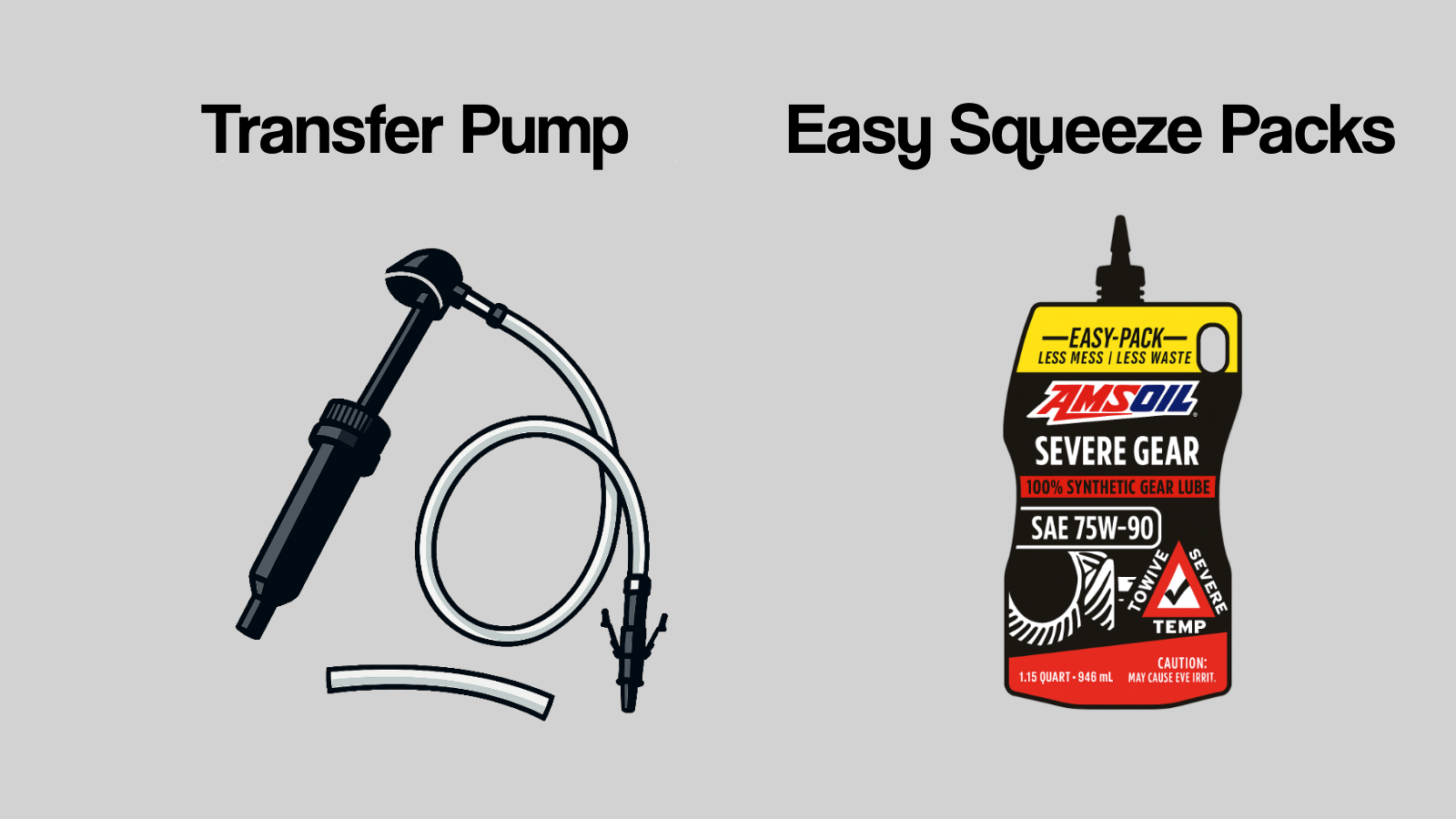
To get started you will need to find out the correct fluid for your application. This can be found in the service or maintenance manual for your car. In addition to the fluid, you will need a fluid transfer pump to transfer the fluid to your transmission or differential. Recently, manufacturers have been offering an easy squeeze pouch which really makes this process simple. You will also need a pan for catching fluid, gloves, and some towels to clean up any spills. Don’t forget the correct socket to remove the fill and drain plugs.
Drain out the Old Fluid:
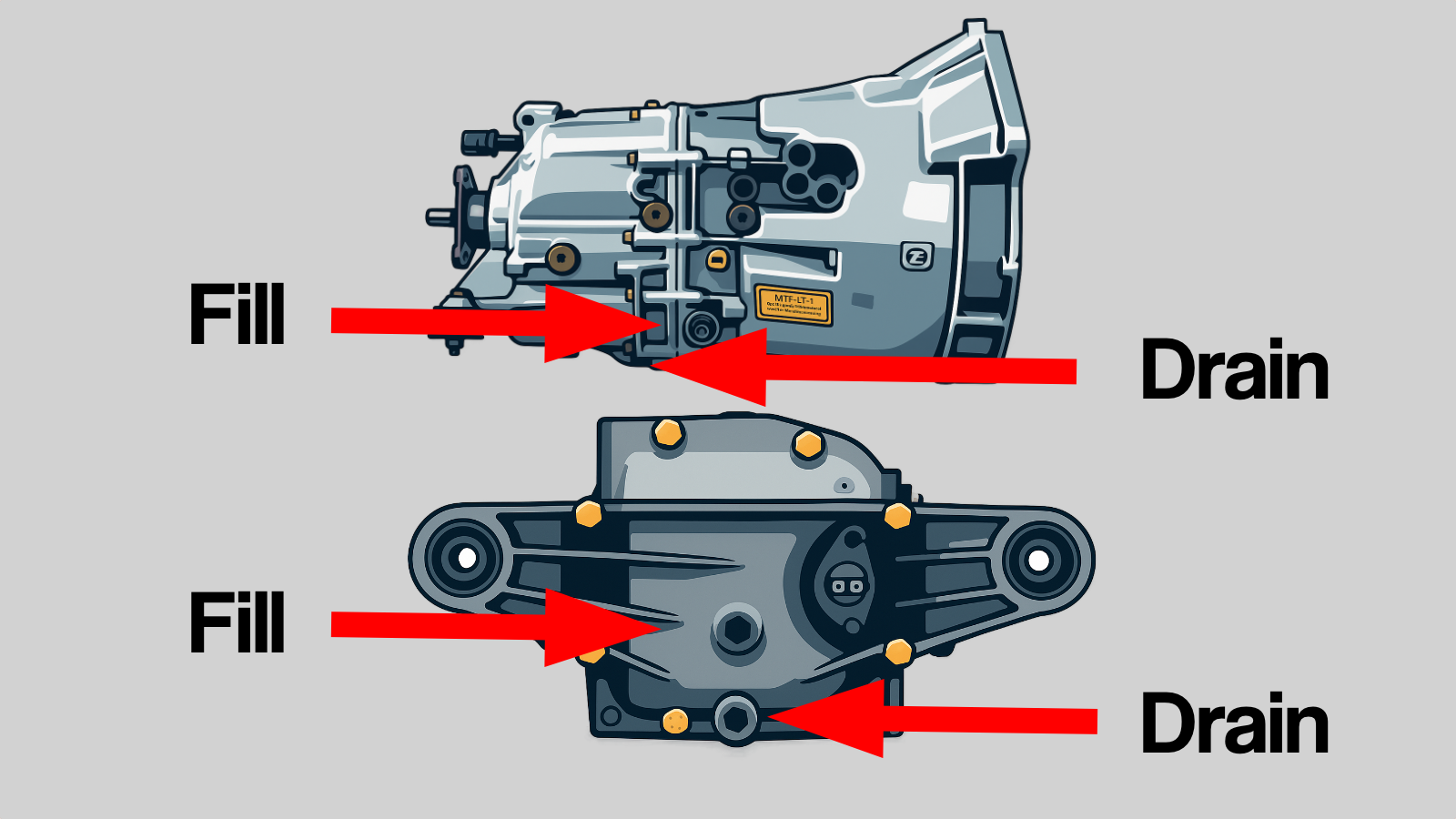
Next you will need to find the fill and drain plugs on your component. If you are looking at your transmission or differential, there will always be two plugs. One will be for the drain, and one will be for the fill. The drain plug will always be lower than the fill plug.
Pro Tip: Before removing the drain plug, always loosen the fill plug. By doing this we can ensure that the fill plug is not stripped, corroded, or just can’t remove. The last thing you want to do is remove the drain plug, drain your fluid, and not be able to fill the component again leaving you stranded.
Inspect the Fluids:
Make sure you inspect the fluid. If the fluid is old, it will smell and look dark. You want to look for metal shavings (shimmer) in the fluid, to tell the health of the component.
Fill to Spill Explained: “How Much Juice is Enough?”
Once the fluid is drained completely, you will replace the drain plug and torque to manufacturer specifications. It is always a good idea to replace the drain plug with a brand new one, but if you cannot, at least replace the gasket if it has one. Some BMW transmissions use a NPT thread (national pipe thread), which is tapered and does not require a copper gasket. These are self sealing.
Remove the fill plug which sits above the drain plug. Note on the transmission, the fill plug is usually on the side of the transmission. Pump fresh fluid into the opening slowly. Keep doing this until fluid starts to dribble out the fill hole. That’s it! The engineers were clever enough to put the fill plug at the exact height in the differential or transmission to give you the exact amount of fluid needed. When this starts to occur, install the fill plug and torque.
Conclusion:
This is a short but meaningful blog. These are simple concepts, but many new mechanics should know the basics.
If you are looking for fluid, plugs or transfer pumps for your project, we sell these parts on the website at www.racegerman.com


